


Search


Aesthetics
The new Intel SSD 320 looks a heck of a lot like the X25-M before it, but given how much SSD designs don't really change through the iterations, this isn't really surprising. The case is the same silver alloy design, based around a 7mm height with an added shim to allow it to be mounted in enclosures expecting a 9.5mm tall body. As you can see below, it's a simple matter of using shorter screws and no shim, and you have a smaller drive in your hands without any other changes.
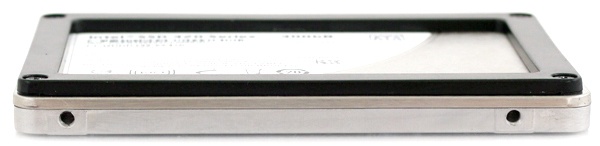
The bottom is bare metal without any stickers present. The top sticker is all that Intel has used over the years, listing the various important pieces of information such as model number, capacity, serial number, firmware version, and the like. They didn't even change the curved radius shape of the sticker, let alone color!
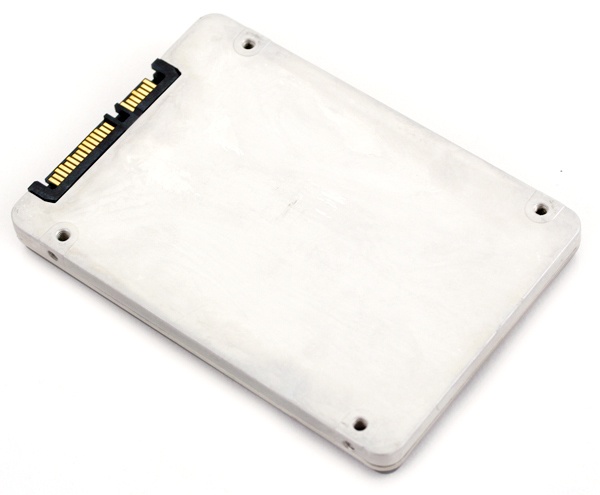
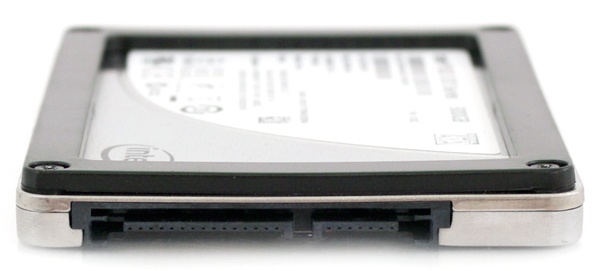
The front of the SSD 320 has the same SATA power and data connection without any service-mode pins located near it. All firmware updating takes place through software only, without any hardware intervention.
Disassembly
Taking the 160GB Intel SSD 320 apart is very easy with a simple Phillips head screwdriver. After removing the four screws located at the corners, which also hold the shim in place, the shim and top cover easily lift up. Once that is removed you are greeted with the underside of the circuit board, which in this case only includes NAND pieces. On the previous 160GB X25-M, the underside was bare.
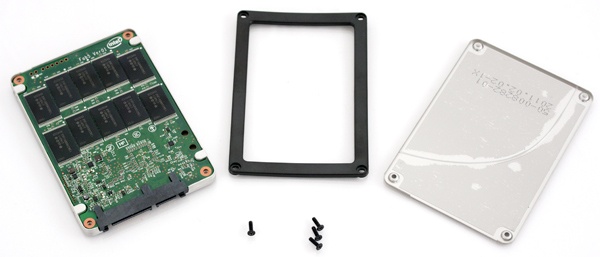
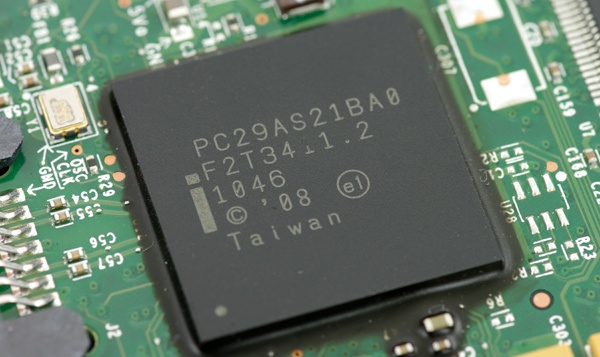
With the way things are going in the SSD market, you might almost start off by saying "out with the old in with the new". In the case of the Intel SSD 320, Intel stuck with what worked best; the good ole PC29AS21BA0 controller, with updated firmware to work with newer 25nm flash. This controller has proved itself to be extremely reliable and versatile over the years, and proves itself yet again to have plenty of life left in it.
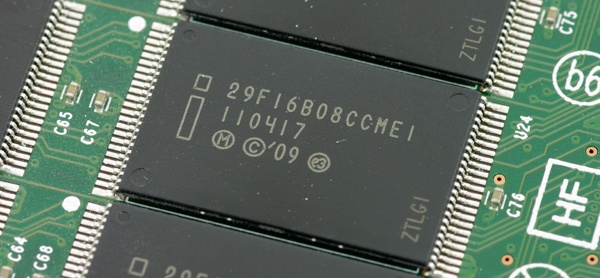
The flash is comprised of twenty 25nm Intel 29F16B08CCME1 16GB pieces, which according to Intel are the "cream of the crop" when it comes to selection from the Intel NAND Factory. When you make the stuff yourself, you can dictate who gets what, and in this case Intel picks the highest grade pieces for themselves. What this means for the consumer is no matter what, if you buy Intel gear you get the best Intel components.
There are two additional features of the Intel SSD 320 that haven't been seen on previous consumer models. The first is the 64MB Hynix Mobile SDR 666Mhz H55S5162EFR-60M, which if you squint close enough you might be able to tell that it is much smaller than previous RAM offerings. This is because unlike using notebook/desktop grade DDR memory, they went with Mobile SDR, which as you can see takes up much less space. It was surprising to see this RAM debut on the 320 and not the much, much smaller SSD 310, which had physical size constraints with the mSATA form factor.
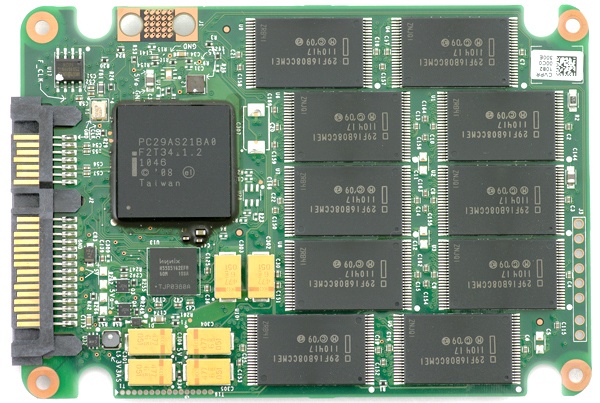
The next change, which we will go into further detail in the power section, is the addition of capacitors to allow the SSD to continue writing data stored in cache to the NAND in the event of a power failure. While not exactly the latest super-capacitor technology as we have seen on other enterprise-class SSDs, this is still said to be enough to write the entire cache contents to NAND when the power is lost.
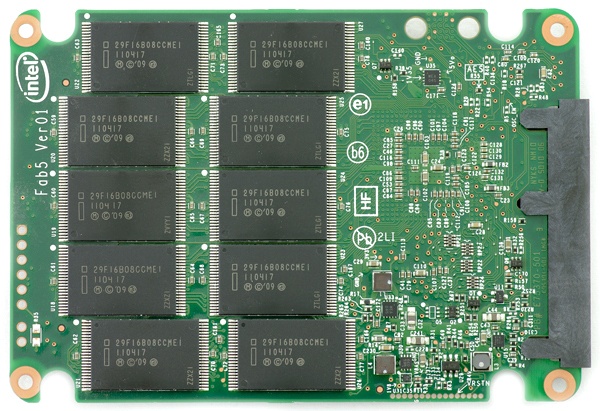
The bottom of the SSD is pretty bare, not counting the ten 25nm 16GB NAND pieces soldered to it. All of the cool stuff is located up on top.
Power Consumption
As we mentioned up above, the Intel SSD 320 adds an array of capacitors to the mix, to help prevent data corruption in the event of power loss. To make this happen, especially on a consumer-grade budget, Intel went with six tantalum-based KEMET Organic Capacitors (KO-CAP) instead of a super-capacitor this is generally seen on enterprise SSDs. These are less expensive, but more importantly, get the same intended job done. Paired with mobile SDR memory, the power requirements for the cache are low enough that six caps with a combined storage capacity of about 0.003F (compared to the 0.18F capacitor on the Viking Modular SSD). Overall if it gets the job done, it doesn't matter what the capacity is as long as it works.
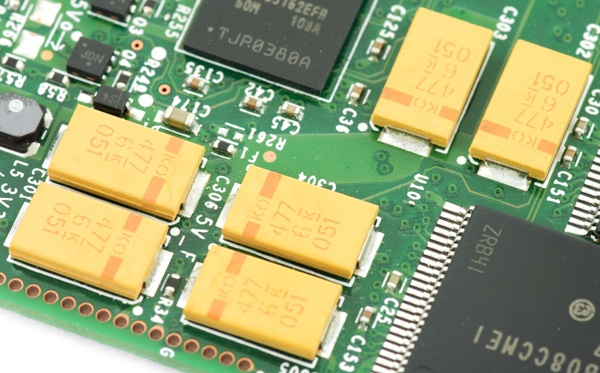
The other job of the capacitor array is protect the drive in the event of being hot-swapped. In hot-swap situations, it is possible that under certain conditions the onboard components can draw more power than what the device is rated for, and fail. These capacitors pull double-duty to provide some backup power and to soften the startup currents during normal conditions. The end results of both areas equals data and device integrity for the end user.
Intel rates the SSD 320 with a maximum active power consumption rate of 4W and an idle rating of 0.7W. To test these claims and see how well the drive performed under constant write, constant write, and random read conditions we used IOMeter as the workload generator and measured the power draw from the SATA-power rail during the test. The following are the average values we recorded.
Aesthetics
The new Intel SSD 320 looks a heck of a lot like the X25-M before it, but given how much SSD designs don't really change through the iterations, this isn't really surprising. The case is the same silver alloy design, based around a 7mm height with an added shim to allow it to be mounted in enclosures expecting a 9.5mm tall body. As you can see below, it's a simple matter of using shorter screws and no shim, and you have a smaller drive in your hands without any other changes.
The bottom is bare metal without any stickers present. The top sticker is all that Intel has used over the years, listing the various important pieces of information such as model number, capacity, serial number, firmware version, and the like. They didn't even change the curved radius shape of the sticker, let alone color!
The front of the SSD 320 has the same SATA power and data connection without any service-mode pins located near it. All firmware updating takes place through software only, without any hardware intervention.
Disassembly
Taking the 160GB Intel SSD 320 apart is very easy with a simple Phillips head screwdriver. After removing the four screws located at the corners, which also hold the shim in place, the shim and top cover easily lift up. Once that is removed you are greeted with the underside of the circuit board, which in this case only includes NAND pieces. On the previous 160GB X25-M, the underside was bare.
With the way things are going in the SSD market, you might almost start off by saying "out with the old in with the new". In the case of the Intel SSD 320, Intel stuck with what worked best; the good ole PC29AS21BA0 controller, with updated firmware to work with newer 25nm flash. This controller has proved itself to be extremely reliable and versatile over the years, and proves itself yet again to have plenty of life left in it.
The flash is comprised of twenty 25nm Intel 29F16B08CCME1 16GB pieces, which according to Intel are the "cream of the crop" when it comes to selection from the Intel NAND Factory. When you make the stuff yourself, you can dictate who gets what, and in this case Intel picks the highest grade pieces for themselves. What this means for the consumer is no matter what, if you buy Intel gear you get the best Intel components.
There are two additional features of the Intel SSD 320 that haven't been seen on previous consumer models. The first is the 64MB Hynix Mobile SDR 666Mhz H55S5162EFR-60M, which if you squint close enough you might be able to tell that it is much smaller than previous RAM offerings. This is because unlike using notebook/desktop grade DDR memory, they went with Mobile SDR, which as you can see takes up much less space. It was surprising to see this RAM debut on the 320 and not the much, much smaller SSD 310, which had physical size constraints with the mSATA form factor.
The next change, which we will go into further detail in the power section, is the addition of capacitors to allow the SSD to continue writing data stored in cache to the NAND in the event of a power failure. While not exactly the latest super-capacitor technology as we have seen on other enterprise-class SSDs, this is still said to be enough to write the entire cache contents to NAND when the power is lost.
The bottom of the SSD is pretty bare, not counting the ten 25nm 16GB NAND pieces soldered to it. All of the cool stuff is located up on top.
Power Consumption
As we mentioned up above, the Intel SSD 320 adds an array of capacitors to the mix, to help prevent data corruption in the event of power loss. To make this happen, especially on a consumer-grade budget, Intel went with six tantalum-based KEMET Organic Capacitors (KO-CAP) instead of a super-capacitor this is generally seen on enterprise SSDs. These are less expensive, but more importantly, get the same intended job done. Paired with mobile SDR memory, the power requirements for the cache are low enough that six caps with a combined storage capacity of about 0.003F (compared to the 0.18F capacitor on the Viking Modular SSD). Overall if it gets the job done, it doesn't matter what the capacity is as long as it works.
The other job of the capacitor array is protect the drive in the event of being hot-swapped. In hot-swap situations, it is possible that under certain conditions the onboard components can draw more power than what the device is rated for, and fail. These capacitors pull double-duty to provide some backup power and to soften the startup currents during normal conditions. The end results of both areas equals data and device integrity for the end user.
Intel rates the SSD 320 with a maximum active power consumption rate of 4W and an idle rating of 0.7W. To test these claims and see how well the drive performed under constant write, constant write, and random read conditions we used IOMeter as the workload generator and measured the power draw from the SATA-power rail during the test. The following are the average values we recorded.